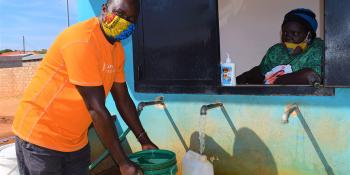
woman and man in africa

2020 – Homes, Communities, Hope, You

Even as COVID-19 significantly impacted Habitat’s ability to build at full capacity — and likely will continue to do so in many locations well into 2021 — we still have seen great progress and positive results. In fiscal year 2020, we helped more than 5.9 million people build or improve a place to call home, and through training and advocacy, an additional 9.9 million gained the potential to improve their housing conditions.

Annual Report 2020 online

Stories and news

How alternative building technologies are expanding affordable housing in Kenya

Decent housing remains out of reach for many low-income families in Kenya due to rising construction costs and limited access to affordable building materials. To help address this challenge Habitat for Humanity Kenya is championing alternative building technologies that reduce construction costs, create local economic opportunities and expand access to safe sustainable housing.

Read more

When the rain no longer brings fear: Strengthening access to water and sanitation in Makululu, Zambia

For Mary, a mother and grandmother living in Makululu, an informal settlement in Zambia, the sound of rain once brought fear. Through a community-driven Water Sanitation and Hygiene (WASH) project funded by the German Federal Ministry for Economic Cooperation and Development, Habitat for Humanity Zambia partnered with residents and local government to transform access to essential services. 

Read more

World Malaria Day 2026 | Rethinking homes to stop malaria

In many parts of the world, the word home evokes safety. But for millions of families living in substandard housing, home is where some of the greatest health risks begin. From respiratory diseases to heat-related illnesses and vector‑borne illnesses like malaria, unsafe housing conditions expose low‑income families to dangers that no one should have to endure.This World Malaria Day, Habitat for Humanity recognizes the life‑saving power of healthy housing, because preventing malaria requires a holistic approach, where mainstream tools like nets and medicine work hand in hand with strong walls, secure roofs, good ventilation and the dignity of a home that protects the people who live in it.

Read more